Budae-jjigae: A History of Survival and Ingenuity
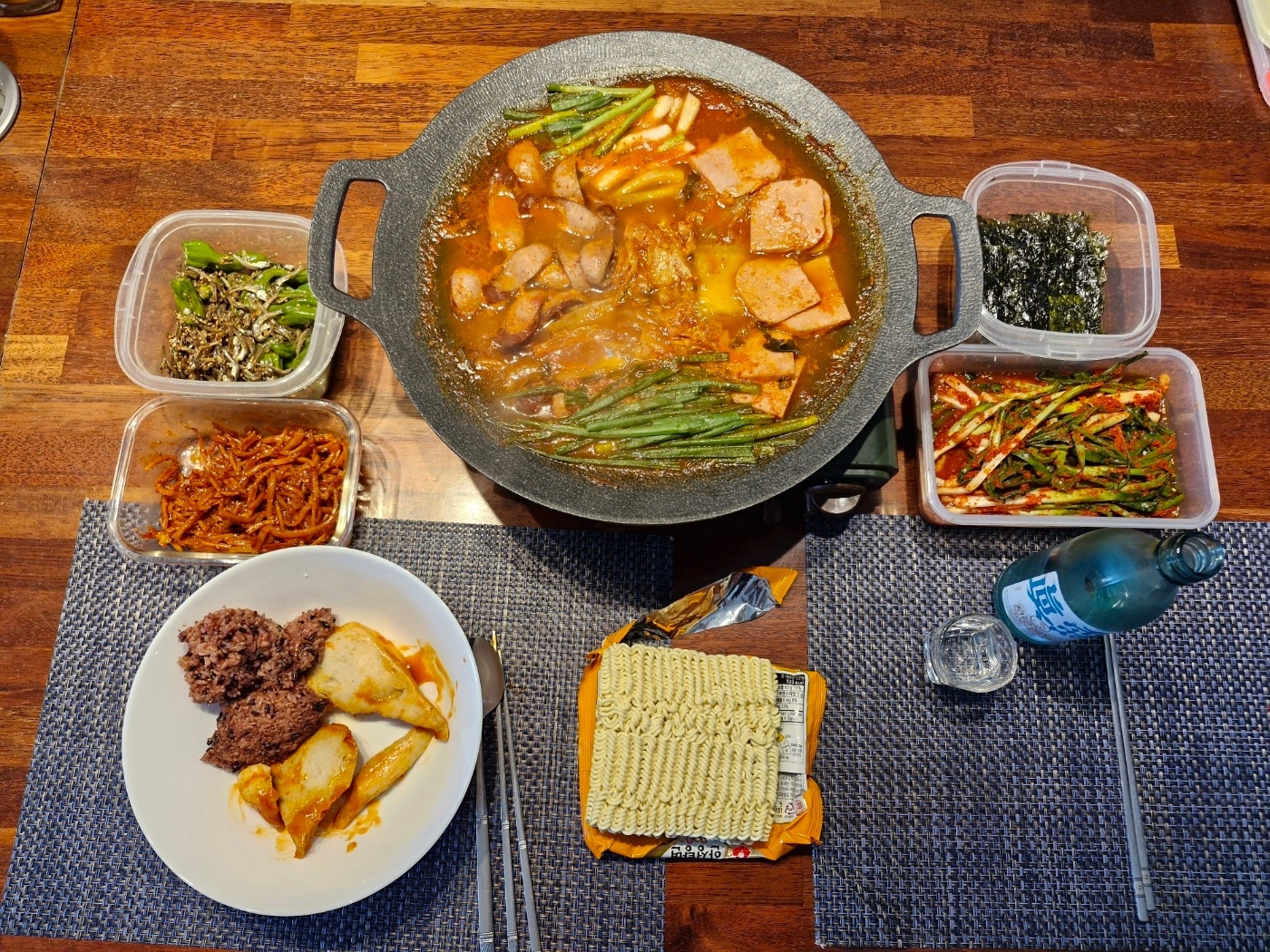
Rich, spicy broth bubbling with tangy kimchi, melted fats, and smoky sausages—this is a dish you can smell before you even sit down. Budae-jjigae, or “Army Stew,” is more than a popular comfort food; it is a symbol of resilience born from the hardships of postwar Korea.
In the 1950s, when food was scarce, people combined surplus U.S. military rations like Spam, sausages, and canned beans with traditional kimchi and gochujang. This hearty stew was a creative solution for survival during difficult times. What began as a meal of necessity has since evolved into a global culinary icon. One spoonful delivers a punch: the sharp acidity of fermented kimchi cuts through the savory salt of Spam, while the smoky juices of sausages melt into a fiery broth. It’s messy, loud, and deeply satisfying.
One Bite, One Sip: The Ultimate Pairing
In Korea, Budae-jjigae is the “King of Pairings.” Whether it’s the clean sting of Soju, a crisp Beer, or even a floral Baijiu, this stew handles it all. One bite, one sip—the spice hits, the drink cleans your palate, and you go right back in.

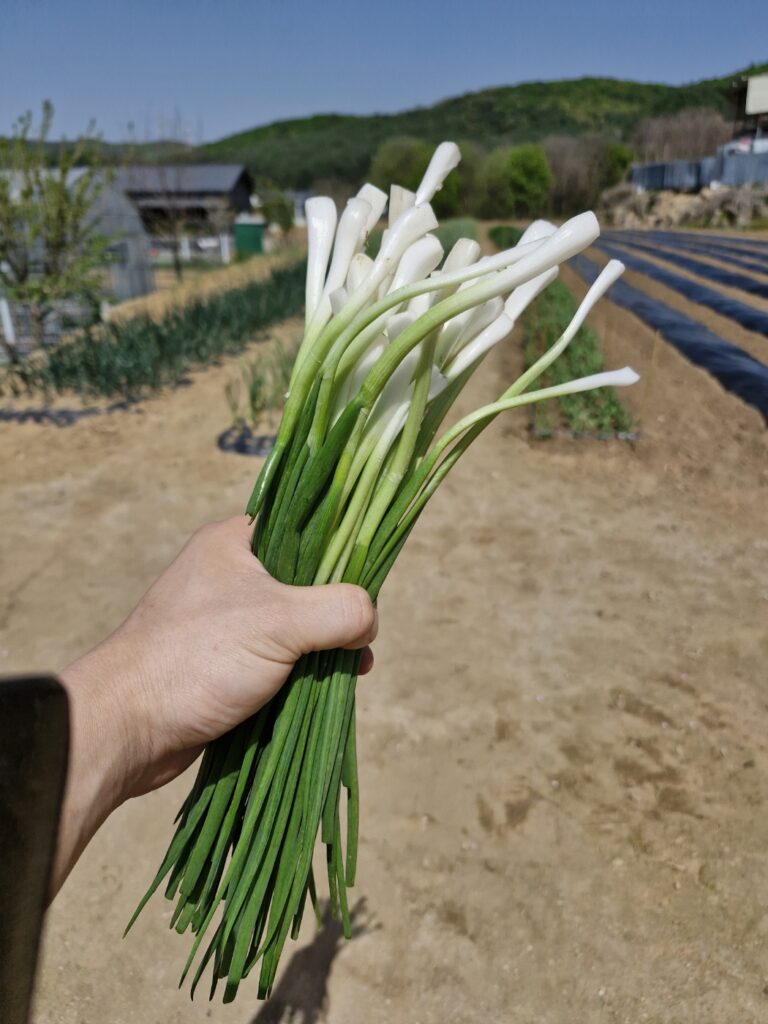

I pulled these straight from my garden. The sharp, earthy crunch of fresh green onions is essential to balance the richness of the meat.
The Science of Flavor
This combination works because it layers acidity (Kimchi), fat (Spam/Sausage), spice (Gochugaru), and starch (Ramen). You are the boss of your pot—it’s a dish meant for customization and fun.
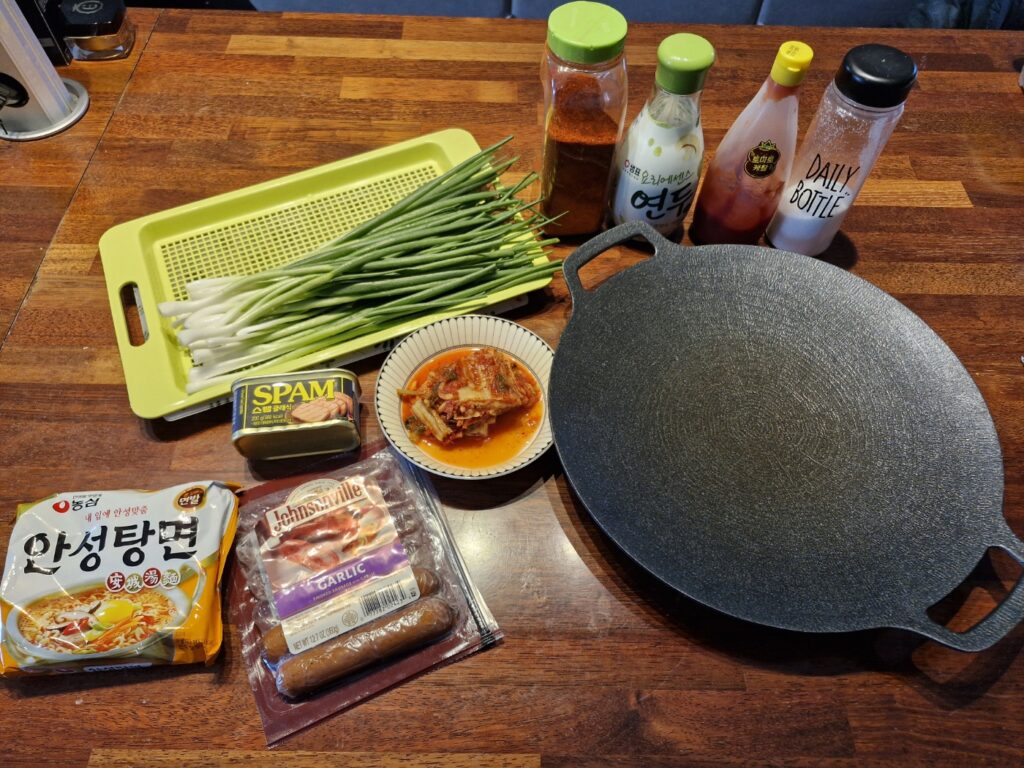
- The Meats: Spam and Johnsonville Sausages. These are the gold standard for texture; they release fat as they boil, forming the rich, smoky base of the entire broth.

- The Secret Sauce: 1L Water, 1tbsp each of Yondu, Sugar, Red Chili Powder.
- The Game Changer: 1tbsp Ketchup. It doesn’t make the stew sweet; it brightens the broth and rounds out the sharp edges of the spice.
- The Shortcut: Half a packet of ramen seasoning for instant restaurant-quality depth.
🔥 Make It Even Better
- Use Sagol-yuksu Instead of Water: Swap water for beef bone broth (Sagol-yuksu) to create a deeper, creamier, almost milky richness.
- Add a Slice of American Cheese: It melts into the broth, creating a velvety texture that balances the heat.
- Start with Stir-Fried Kimchi: Lightly sauté the kimchi before adding water. This intensifies the flavor and removes excess raw sourness.
- The 3-Minute Rule: For the best flavor, let the stew bubble for 3 minutes before adding the ramen so the fat from the sausages has time to fully deepen the broth.
⚠️ Common Mistakes to Avoid
- Using Fresh Kimchi: Budae-jjigae needs aged (sour) kimchi. Fresh kimchi will make the stew taste flat and one-dimensional.
- Adding Too Much Water: This kills the intensity. If it tastes flat, don’t add salt—add a little more kimchi juice or a pinch more ramen seasoning instead.
10 Minutes to Bliss
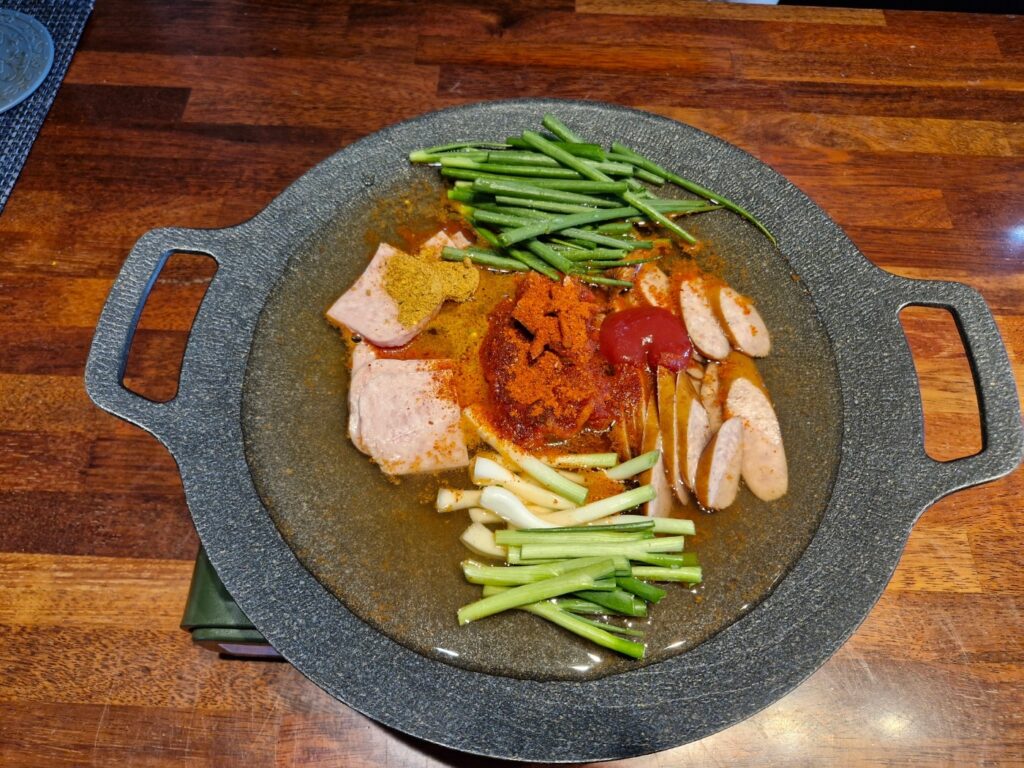

1.The Foundation: Lay the Kimchi at the bottom. Pile the sliced meats and garden-fresh onions on top


2.The Alchemy: Pour the water and add the seasonings. Remember, the ketchup is the key to unlocking the richness of the meat.




3.The Melt: Boil it hard. Watch the fats bleed into the water until the broth turns deep and slightly oily—that’s when you know it’s ready.


4.The Finish: Drop the ramen. As it cooks, the starch thickens the broth into a savory, addictive gravy.


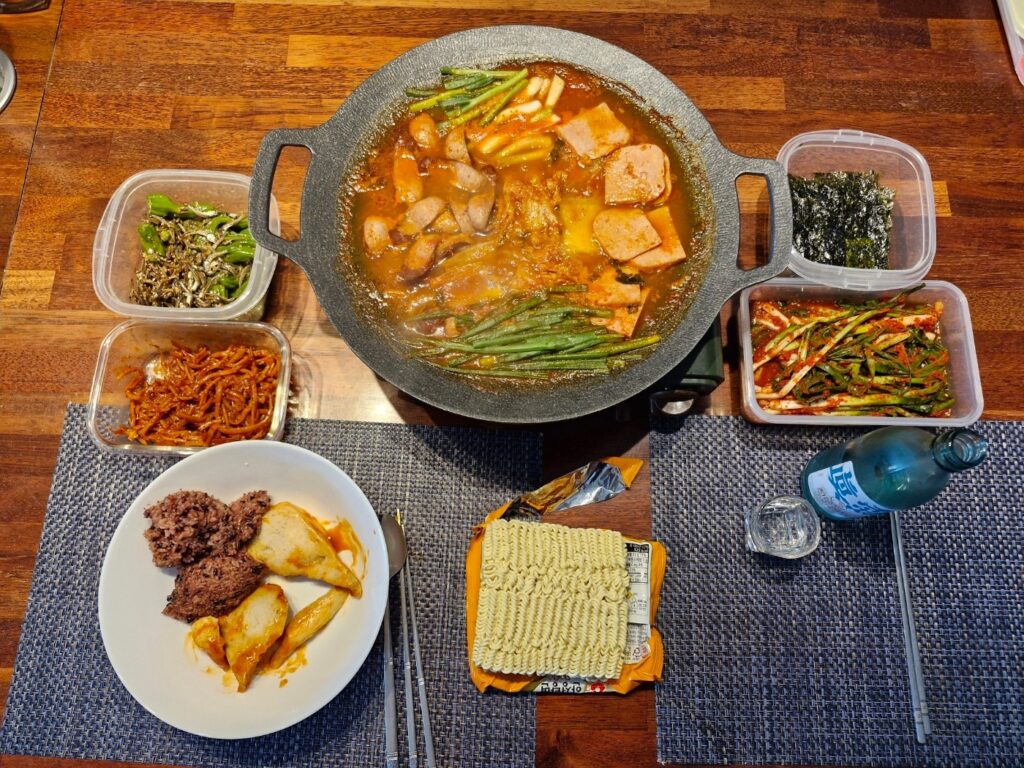
This isn’t just food—it’s what you make when friends show up unannounced, when the night gets longer than expected, or when you just need something real. It’s not perfect food—it’s real food. And that’s exactly why it hits harder. Grab a cold drink, call your people, and dive into a pot of history.
🍲 Doenjang-jjigae: The Real Foundation of Korean Home Cooking
While some dishes are about flashy spices, Doenjang-jjigae is about deep, fermented depth. It’s the earthy backbone of every Korean meal. I’ve refined a version that focuses on the timing of the paste and the texture of the vegetables to capture that true rustic flavor. If you want a meal that feels grounded and nourishing, check out my [Authentic Doenjang-jjigae Recipe]. It’s the ultimate “rice stealer.”
🥘 Kimchi-jjigae: The Perfect Palate Cleanser After Spicy Meals
After enjoying something rich like Dakgalbi, you naturally crave a sharp, refreshing broth to clear the palate. The secret isn’t a long list of ingredients; it’s all about how you sear the aged kimchi before adding the broth. I’ve documented my method for getting that deep, restaurant-quality tang at home. See the [Pro Tips for Traditional Kimchi-jjigae] here.
🥢 Jeyuk-bokkeum: Smoky, Spicy Pork When You’re Short on Time
On days when firing up the charcoal grill feels like too much work, Jeyuk-bokkeum is my go-to. The key is making sure the marinade doesn’t just sit on the surface but actually penetrates the meat, followed by a quick sear over high heat for that essential smoky finish. If you’re looking for a bold, high-protein meal that’s fast to prep, try my [Addictive Jeyuk-bokkeum Routine].