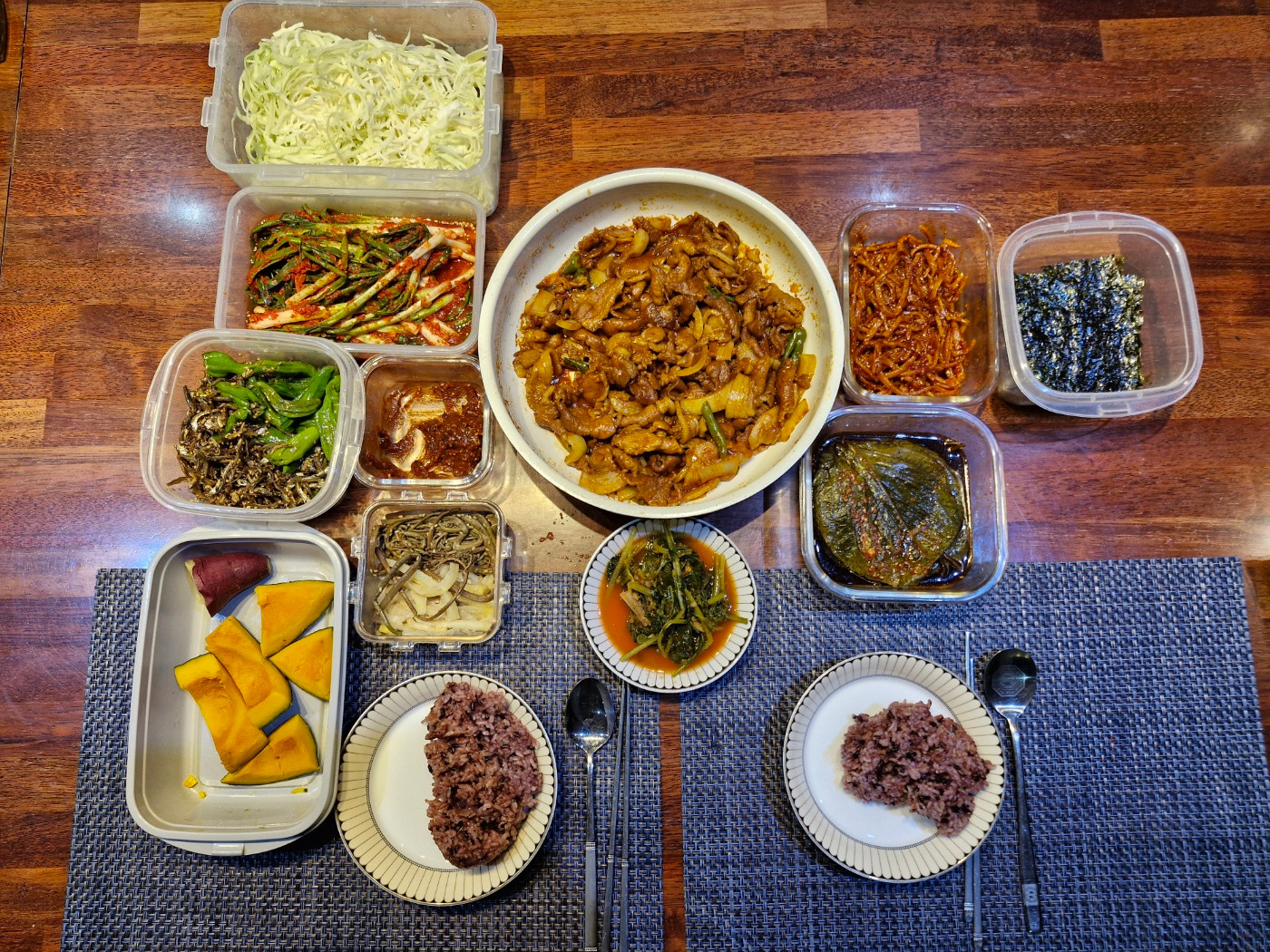
Jeyuk-bokkeum: Korea’s Most Reliable “Rice Thief”
If you ask anyone in Korea about their favorite meal, Jeyuk-bokkeum is often considered one of the top comfort foods. This spicy pork stir-fry, with its bold gochujang base and smoky finish, is the definition of a “Rice Thief” (Bap-doduk)—a dish so savory it makes a bowl of warm rice disappear in minutes.
💡 Cultural Insight: The Reliable Fuel for Busy Workers In modern Korea, Jeyuk-bokkeum has earned a legendary status as the “fail-proof” meal. It is famously known as a staple lunch for busy workers and everyday diners across the country. There’s even a common joke that if you’re undecided on what to eat, the answer is always either Jeyuk-bokkeum or Tonkatsu (Pork Cutlet).
The secret lies in its “Maximum Satisfaction and Stability.” First, it offers incredible value for money. For a reasonable price, you get a hearty, high-protein meal that guarantees you won’t leave the table hungry. Second, it provides “Subtle Variety.” While the core flavor is consistent, every local diner has its own secret—the specific cut of the pork, the crunchiness of the vegetables, or the slight smoky flavor achieved through high-heat stir-frying. For anyone navigating a long, stressful workday, the spicy kick and rich protein of Jeyuk-bokkeum offer a reliable ritual of energy and satisfaction. It’s more than just a stir-fry; it’s the fuel that powers the hardworking spirit of Korea.
Ingredients & Preparation
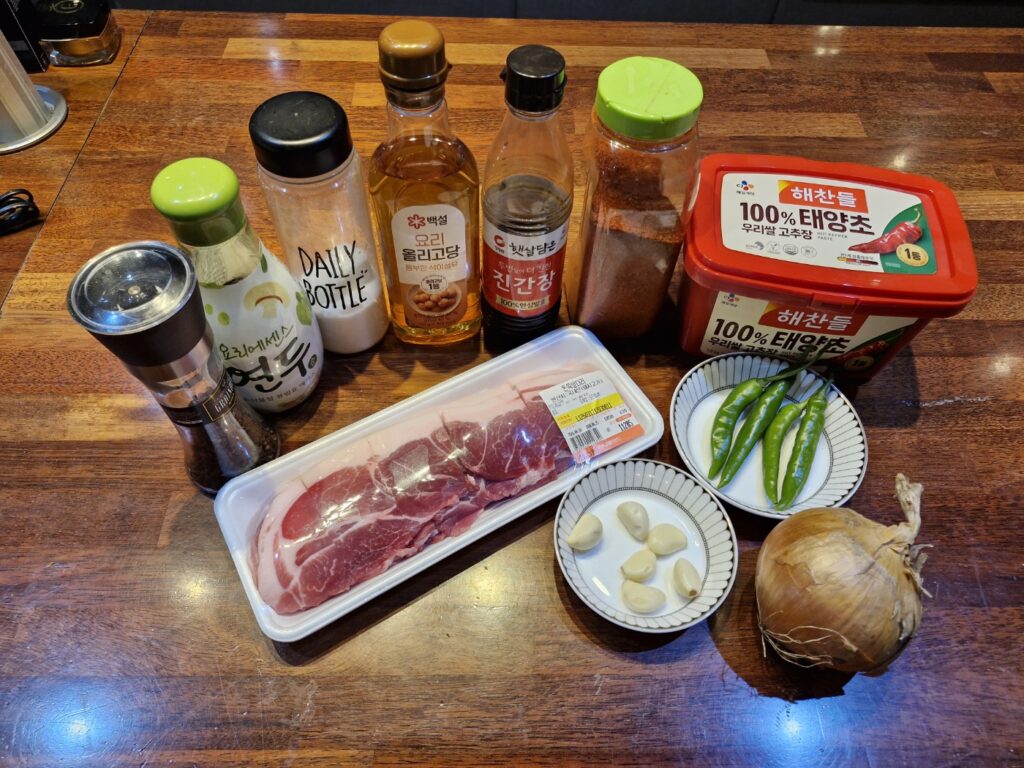
The Pork (600g)
- Pork shoulder or pork neck, thinly sliced
- Pro Tip: Look for meat with firm white fat and a bright pink color. In Korea, pork front leg meat is also a popular, cost-effective choice for its great texture.
Vegetables
- 1 Onion (thinly sliced)
- 3–4 Green/Red chilies (diagonally sliced)
- 5–7 Garlic cloves (freshly crushed)
The Golden Ratio Sauce
- 1.5 tbsp Gochujang (Korean chili paste)
- 2 tbsp Gochugaru (Korean chili flakes)
- 3 tbsp Soy sauce
- 1 tbsp Sugar & 1 tbsp Oligosaccharide (or honey/syrup)
- 1 tbsp Yondu (or liquid MSG for that professional touch)
- Black pepper (to taste)
- Optional: 1 tsp Sesame oil (added at the very end)
Step-by-Step Cooking Guide


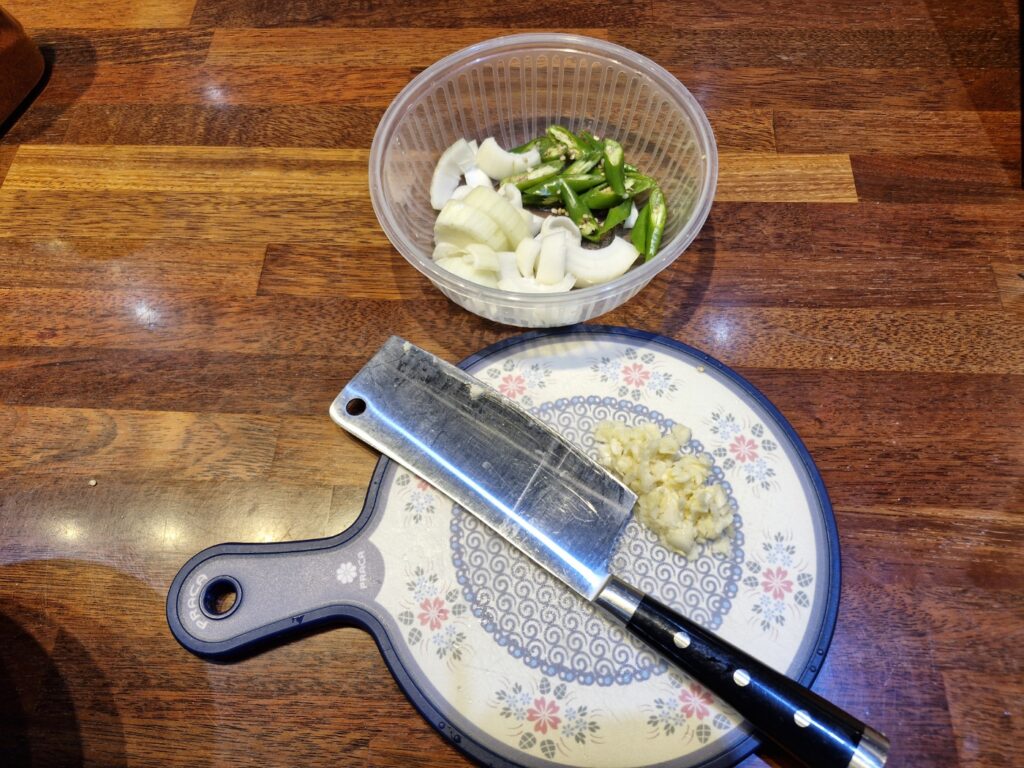
1. Prepare the Aromatics
First, slice your vegetables to ensure a smooth cooking flow. For the best flavor, crush the garlic using a mortar and pestle rather than using pre-minced garlic.

2. Master the Sauce & Marination
- Expert Tip: Mix your sweet ingredients (sugar, syrup) into the bowl first. This helps them dissolve more evenly before you add the thicker pastes and sauces.








Once the sauce is ready, add the pork and mix by hand (using a glove) to coat every slice. Finish with a few shakes of black pepper.

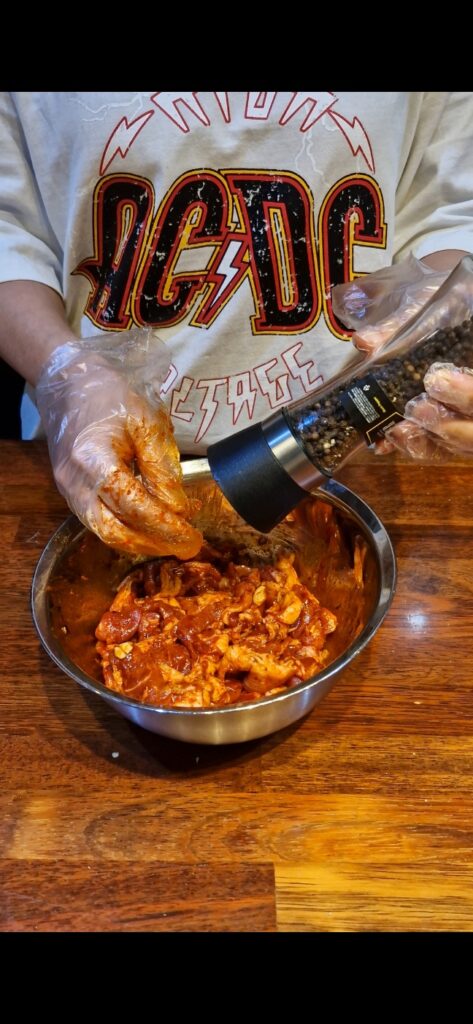

💡 Marination Time: Let the pork sit for 15–30 minutes. Avoid over-marinating (more than 2 hours), as the meat texture can become too soft.
3. Stir-Fry: The “Water Secret” & Heat Control




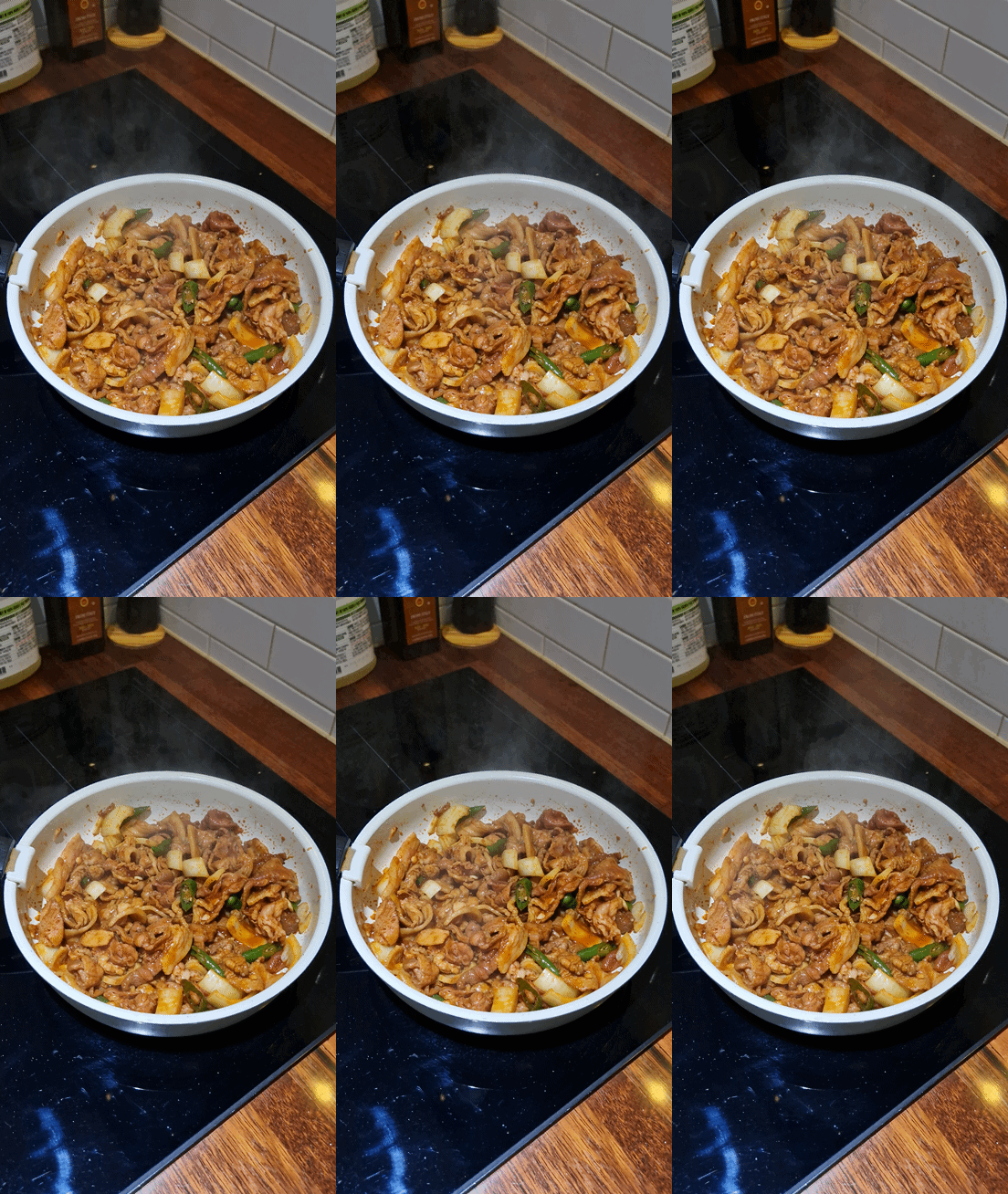
Heat oil in a wok and sauté the onions and chilies first to infuse the oil. Add the marinated pork over the vegetables.
- Heat Control: Start on medium heat to prevent the gochujang and sugars from burning. Once the pork begins to cook and release its juices, increase to high heat to finish with a slight caramelization.
- The Secret: If the sauce starts to stick or look like it’s burning, add about 100ml of water. This prevents burning and helps the pork cook through evenly.
- The Finish: Continue stir-frying on high heat until the water evaporates and the sauce thickens into a glossy glaze that clings tightly to the meat.
How to Enjoy Like a Local: The ‘One-Bite’ Rule
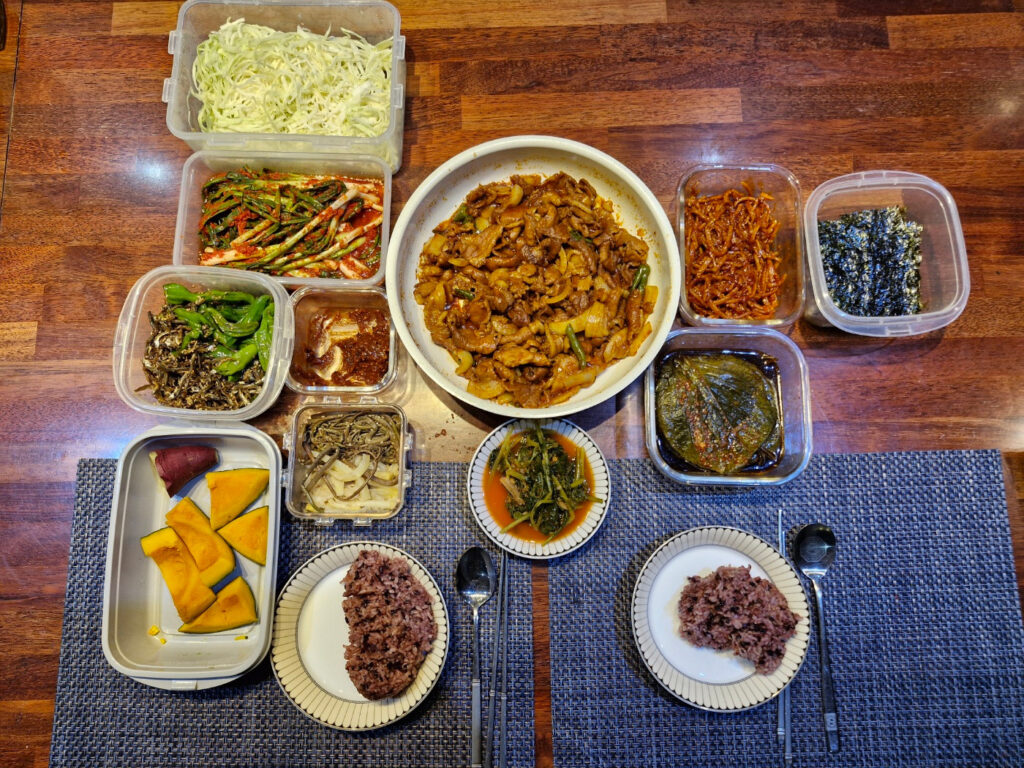
In Korea, Jeyuk-bokkeum is one of the best dishes for Ssam (wraps). Take a leaf of lettuce or perilla, add a spoonful of rice, a generous piece of pork, ssamjang, and a slice of garlic.
The Tradition: Put the entire wrap in your mouth at once. Do not bite it in half! This “one-bite” explosion of flavor is the essence of Korean soul food.
Optional Pairing
Traditional pairings include a cold Beer or Soju. Surprisingly, if you’re eating the meat without wraps, it also pairs beautifully with Whiskey or even a bold Red Wine.
Since this is a very simple dish to make yourself, I highly recommend you try making it at home!
Have you tried making jeyuk-bokkeum at home? Let me know your thoughts in the comments below!
🐟 Stir-Fried Anchovies: The Perfect Salty-Sweet Crunch If you’re looking for a side dish to balance the bold heat of the pork, stir-fried anchovies with shishito peppers (Myeolchi-bokkeum) are the ideal companion. The subtle bitterness of the peppers and the salty-sweet crunch of the anchovies add a layer of texture that completes the meal. See how I achieve that perfect glaze without the stickiness: My Reliable Myeolchi-bokkeum Recipe.
🍲 Doenjang-jjigae: The Deep, Earthy Balance A spicy stir-fry like Jeyuk-bokkeum needs a grounding partner. While the pork provides the intensity, Doenjang-jjigae (Soybean Paste Stew) offers a deep, savory calmness that clears the palate. I focus on the timing of the fermented paste to ensure a rich, rustic flavor that isn’t overwhelmed by the meat. Check out the [Authentic Doenjang-jjigae Guide] for a truly balanced home-cooked experience.
🥘 Kimchi-jjigae: For Those Who Crave the Full Spicy Experience Sometimes, you just want to go all-in on bold Korean flavors. Pairing Jeyuk-bokkeum with a sharp, tangy Kimchi-jjigae is a classic choice for those who love an intense, satisfying meal. The key is using well-aged kimchi to provide a refreshing acidity that cuts through the richness of the pork. Discover the secret to that restaurant-quality tang: [Pro Tips for Classic Kimchi-jjigae].