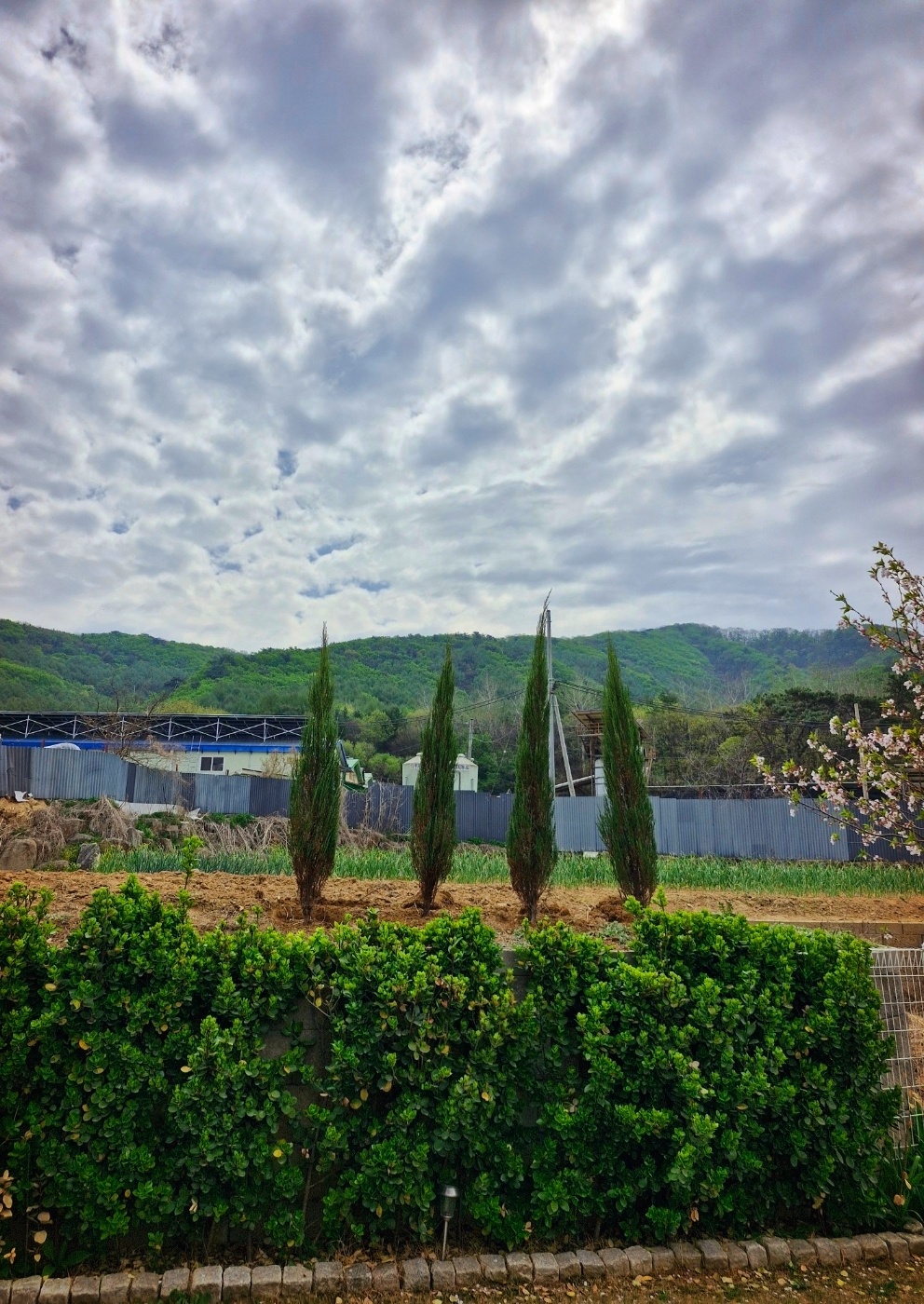
Everything looked perfect on day one. I had just finished lining my backyard pathway in Paju with Blue Arrow and Moonglow junipers.
Starting the Paju project with freshly dug Blue Arrow and Moonglow junipers.
I even dug them up myself from a local farm, bringing them home with a lot of hope. I remember standing there, looking at the row of trees, thinking, “This is it — the backyard finally has its shape.”
I transported what looked like healthy stock from a local farm, full of anticipation.
The Warning Sign: Why My Blue Arrow Juniper Started Browning
The first sign was small but impossible to ignore. The Blue Arrow started turning brown from the bottom. At first, I told myself it was just common transplant shock.
Up close, the browning needles clearly pointed to excessive moisture stress.
But something didn’t sit right. The browning was spreading faster than expected.
Then I looked at the trees around it. The Moonglow juniper was perfectly fine, and the white willow nearby was growing even more vigorously than before. That was the moment it clicked. This wasn’t just stress; it was a specific environmental mismatch.
The Investigation: Diagnosing Blue Arrow Juniper Drainage Issues
I couldn’t just watch it die. I grabbed a shovel and started digging to see what was happening to the roots.
Inspecting the root system after digging the tree back up to find the root cause.
As soon as I got into the soil, the history of this spot came rushing back. Two maple trees had already died in this exact spot before. I had blamed “bad luck” back then, but now, the soil was telling a different story.
Comparing root structures of uprooted trees to diagnose the drainage failure.
The surface felt dry, but just a bit deeper, the soil was holding moisture like a sponge. In this heavy soil, the roots were essentially drowning. To make matters worse, I had planted the tree too deep, burying the root flare and suffocating it.
This was the exact spot near the stone wall where previous maples had already failed.
The Rescue: Relocating the Blue Arrow Juniper for Survival
I realized that waiting was not an option. I moved my Blue Arrow Juniper immediately to a sloped area near a stone wall—a location where water would never sit. This time, I prioritized biology over aesthetics.
Preparing the new planting holes with improved soil structure and organic fertilizer.
I planted it slightly higher than ground level so excess water would naturally drain away. I improved the soil structure with coarse sand to ensure the roots could breathe.
Implementing “High Planting” to ensure the root flare stays dry and aerated.
The newly replanted row, now optimized for Paju’s soil and wind conditions.
The Hard-Earned Lesson The brown needles won’t turn green again. But after moving it, the browning stopped. The growing tips are still firm, and that tells me the tree has a chance.
I thought I had a “tree problem,” but in reality, I had a location problem. A spot where a willow thrives can be a graveyard for a juniper. Sometimes the tree isn’t the problem—the ground is. And until you fix that, nothing else really matters.
The final landscape: A garden view shaped by observation and location-specific experience.
🌲 Quick Guide: Blue Arrow & Moonglow Care
Prioritize Drainage: Junipers, especially Blue Arrows, hate “wet feet.” Poor drainage equals browning.
Watering Rule: Water deeply but less frequently. Wait until the inner soil is dry.
The Power of High Planting: Never bury the root flare. Plant slightly above ground level to ensure aeration.
Warning Signs: Browning from the bottom or wilting usually points to excessive moisture stress.
Location is Everything: Don’t try to fix a bad location with more water or fertilizer—relocate the tree to a better spot.
💡 A Note on the Species: “The Model with Wild Instincts”
If you search for the scientific name of these trees online, you’ll likely see photos of massive, wild trees that look nothing like the ones in my yard.
But remember—the Blue Arrow and Moonglow we plant are cultivars chosen for their sleek, model-like beauty. It might look glamorous, but it still carries the wild instincts of its ancestors. Its extreme sensitivity to drainage is a primal trait. We must never forget that underneath that refined look, it still demands the same conditions as its wild relatives.
🌿 Take a Glimpse into Our Paju Garden Life
Growing individual trees is a constant learning process, but the garden is also about the larger rhythm of the seasons. If you’re curious about the quiet, self-sufficient life we are building in the hills of Paju—where the -1°C morning air meets the first buds of spring—click the link below to see the bigger picture.
🍕 From Trees to Wood-Fired Feasts: Building a DIY Pizza Oven
Gardening is hard work, but the reward is what makes it worth it. When I’m not digging up junipers, I’m firing up the centerpiece of our backyard: a handmade Neapolitan pizza oven. It took a month of struggle, precise brick-cutting, and a few failures to get it right. If you want to see how we brought authentic Italian flavors to the Paju countryside, check out my full construction guide below.